RAPIDPlus
The recommended device for farm co-ops, and diagnostic service providers. RAPIDPlus delivers Ct-equivalent At (amplification time) values — so you know not just if disease is present, but how severe the infection is.
Integrated heater-reader · Semi-quantitative results
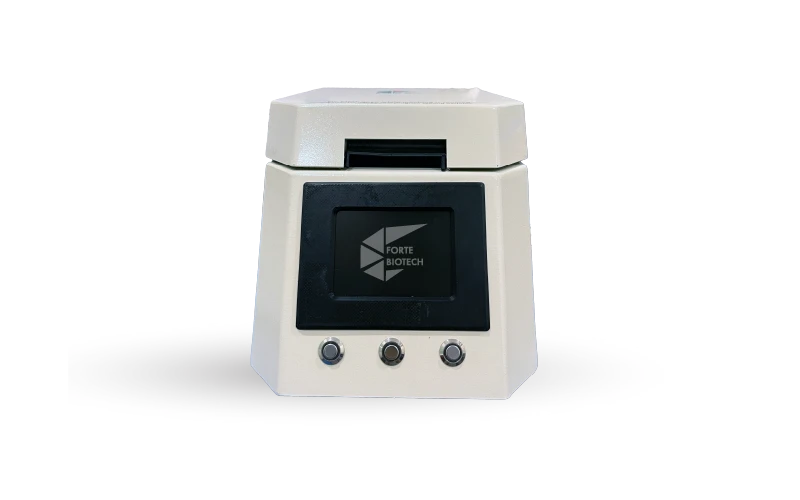
Watch RAPIDPlus in the field.
See how RAPIDPlus delivers semi-quantitative Ct values on-site — giving you severity data, not just a yes/no answer.
Know the severity. Not just the answer.
A qualitative test tells you disease is present. But is the pond about to crash, or is it a low-level background infection you can manage? RAPIDPlus gives you Ct-equivalent At (amplification time) values — so you can make informed decisions based on pathogen load, not just presence.
Low Ct (<25)
High pathogen load. Immediate action required — treatment, harvest, or isolation before it spreads to adjacent ponds.
Mid Ct (25–33)
Moderate pathogen load. Monitor closely, increase biosecurity measures, and retest in 48–72 hours to track progression.
High Ct (>33)
Low pathogen load. Background-level infection — continue routine monitoring. No immediate intervention needed.
Who uses RAPIDPlus.
R&D Centres
Quantitative Ct data for research trials, treatment efficacy studies, and breeding programme pathogen screening.
Co-ops
Share one device across multiple farms. Severity data helps prioritise which ponds need attention first.
Hatcheries
Screen broodstock and post-larvae before shipment. Quantify pathogen load to make accept/reject decisions with confidence.
RAPID vs RAPIDPlus vs RAPIDMax
| Feature | RAPID | RAPIDPlus | RAPIDMax |
|---|---|---|---|
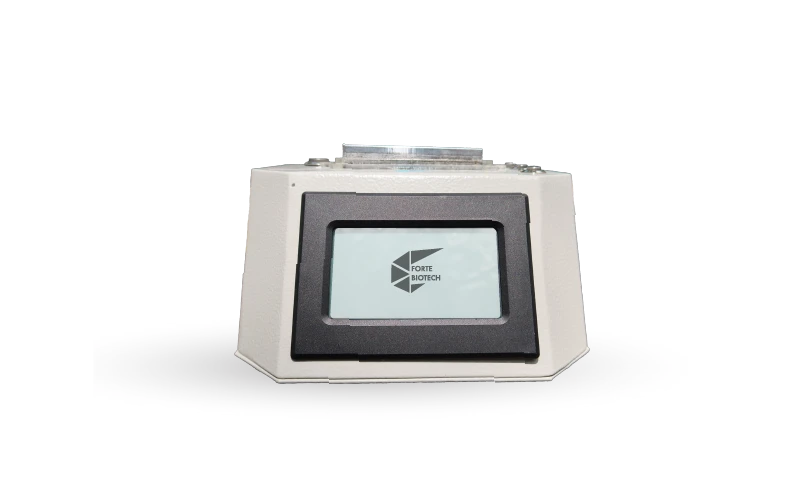 | | 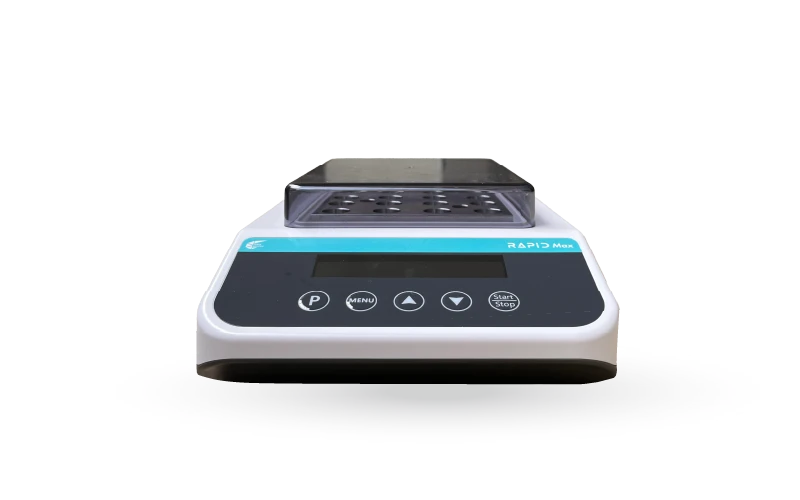 | |
| Capacity | 2 samples | 2 samples | 12 or 24 |
| Output | Qualitative | Quantitative (Ct) | Qualitative |
| Time to result | <1 hour | <1 hour | <1 hour/batch |
| Portable | ✓ | ✓ | ✓ |
| Best for | Farms / field | Co-ops / hatcheries | Service centres / hatcheries |