The harvest you save starts with the test you run today.
RAPID was built for shrimp farming because it's one of the hardest diagnostic environments imaginable — remote ponds, fast-moving pathogens, and farms hours from any lab. That constraint made us better engineers.
Six shrimp pathogens. One platform.
All running the same workflow, results in under 1 hour.
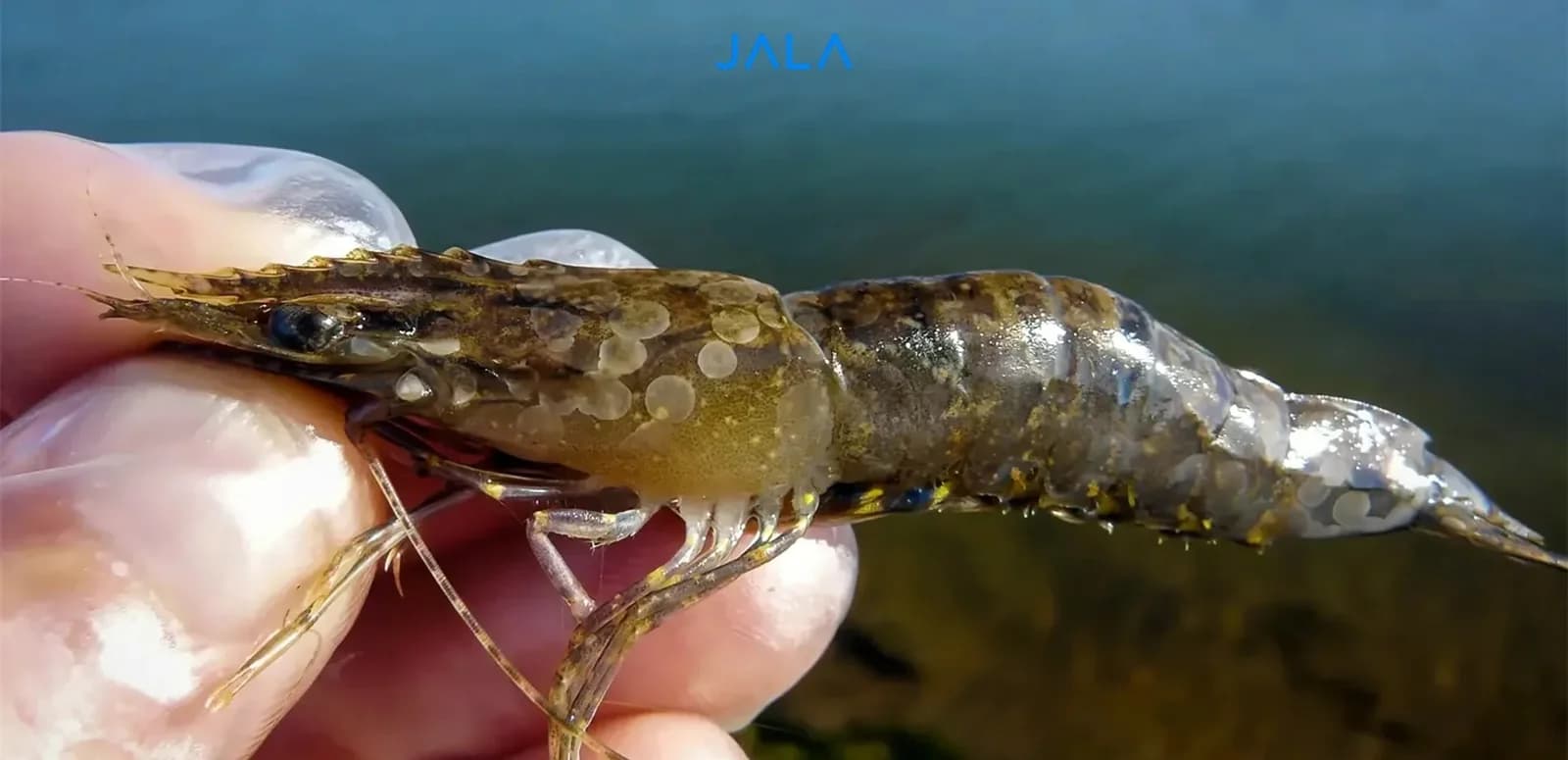
Photo: Wikipedia / CC BY-SA
White Spot Syndrome Virus
Most economically destructive shrimp pathogen globally. 100% mortality within 3–10 days of infection onset. Early detection allows pond isolation before lateral spread occurs.
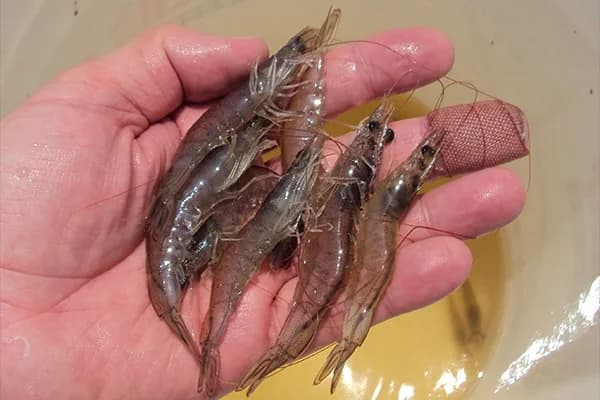
Photo: NACA / enaca.org
Enterocytozoon hepatopenaei
Microsporidian parasite causing 30–50% slower growth. Often misdiagnosed as a nutrition problem. Critical to screen PL batches before stocking to avoid introducing EHP into clean ponds.
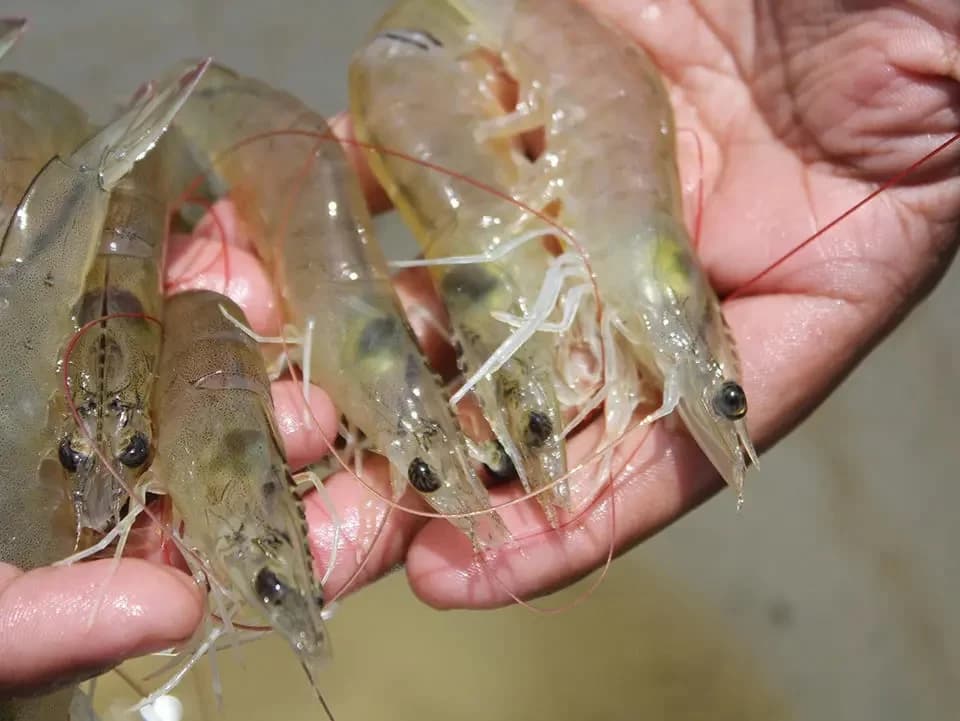
Photo: FAO / fao.org
Acute Hepatopancreatic Necrosis Disease
Caused by specific Vibrio parahaemolyticus strains. Rapid hepatopancreas destruction, high early mortality. Particularly devastating in hatcheries and early-stage grow-out.
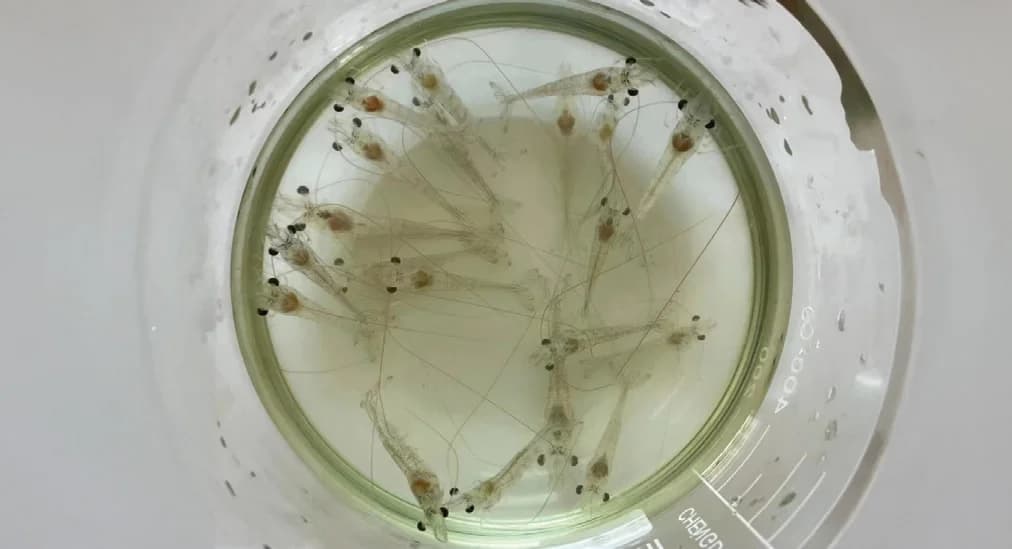
Photo: NACA / enaca.org
Translucent Post-larvae Disease
Emerging condition affecting postlarvae quality and survival rates. Increasingly reported across Vietnamese and Thai hatcheries. Early-stage screening critical.
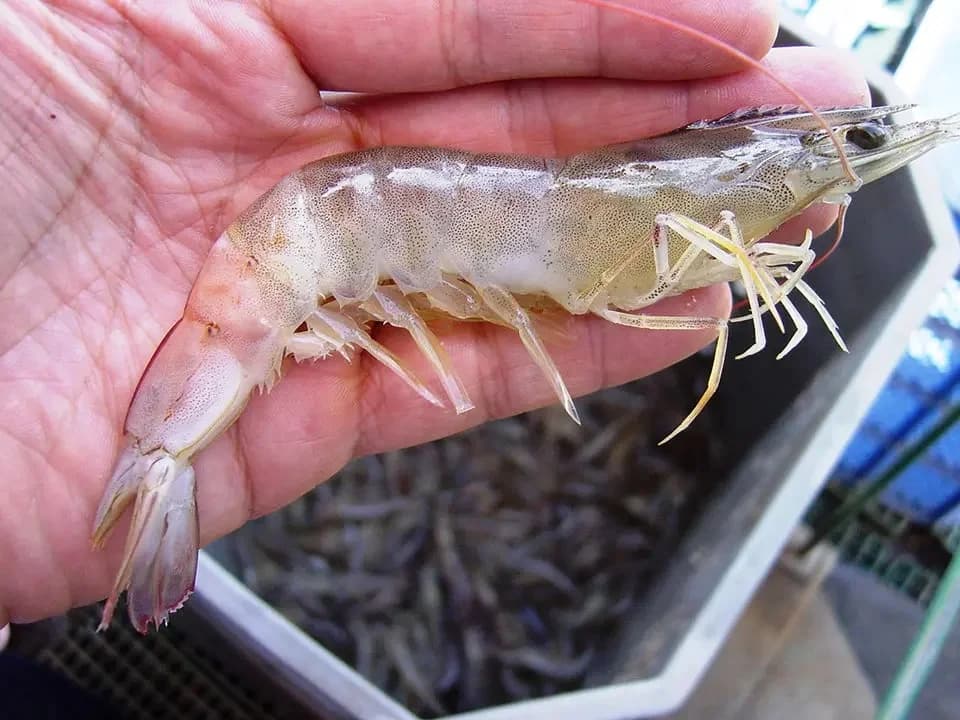
Photo: Wikipedia / OIE Manual
Infectious Myonecrosis Virus
Causes whitening and necrosis of skeletal muscle in P. vannamei. Significant economic impact in Brazil, Indonesia, and Southeast Asia. Mortality rates of 40–70% in affected ponds. LAMP assay in development.
In Development
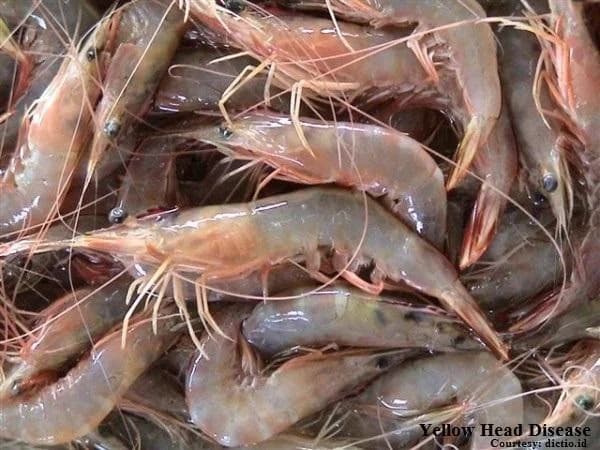
Photo: Wikipedia / CC BY-SA
Yellow Head Virus
Causes rapid yellowing of the cephalothorax and high mortality within 3–5 days of visible signs. Historically devastating in P. monodon farming across Thailand and wider Asia. LAMP assay in development.
In Development
Deployed across 9 countries.
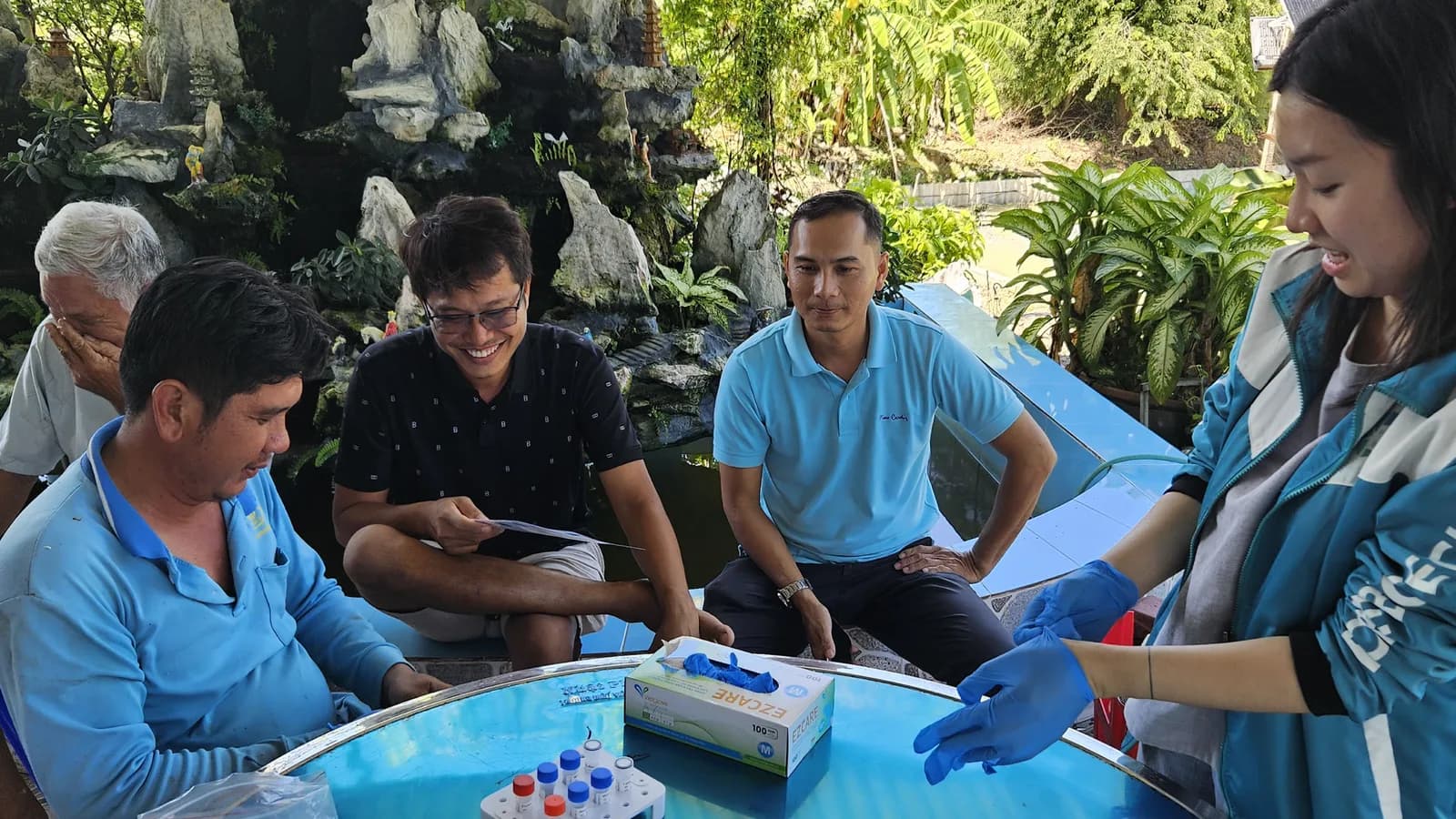
Photo: Forte Biotech
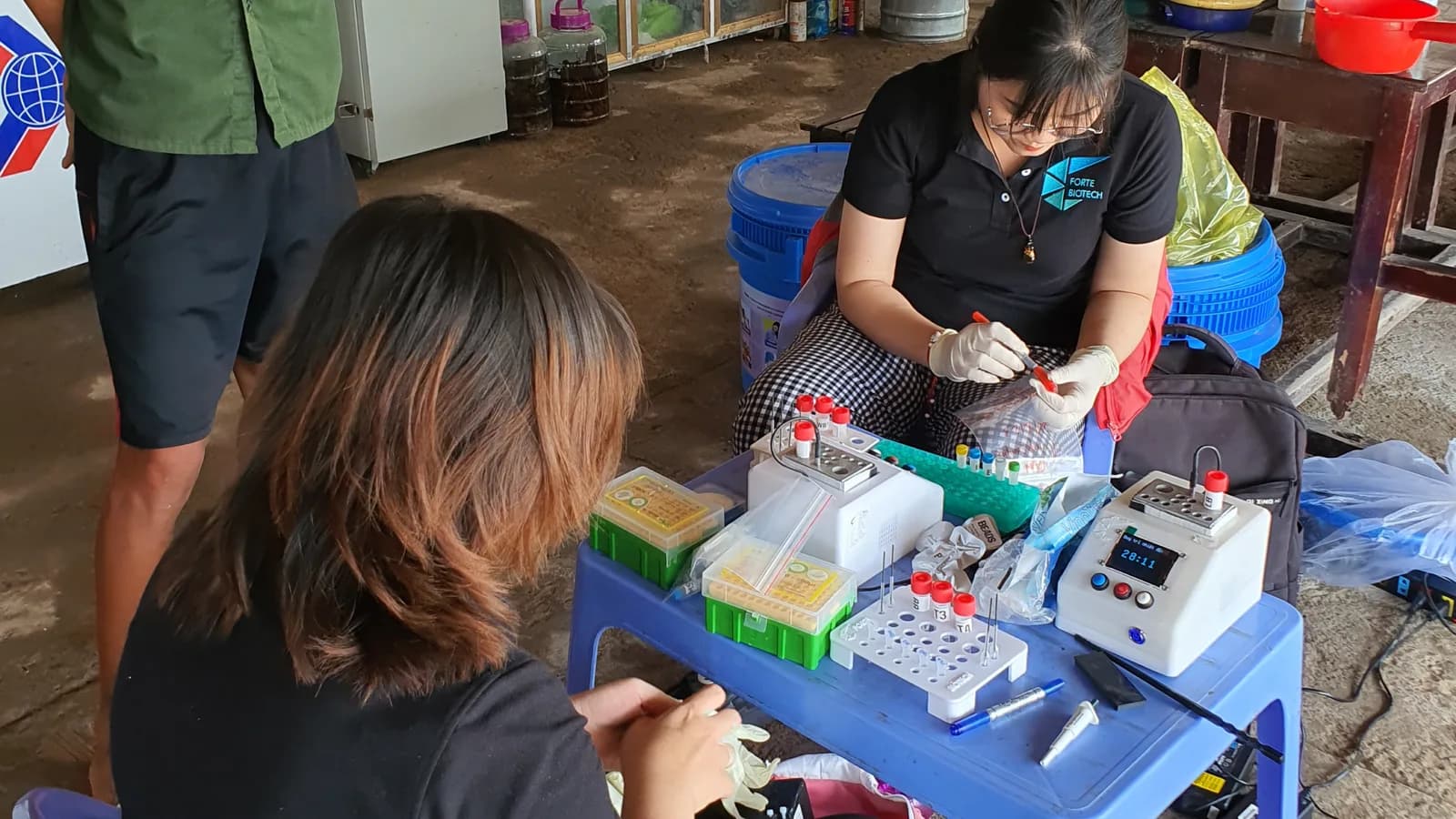
Photo: Forte Biotech
Ready to bring on-site diagnostics to your operation?
Request a demo, a quote, or a conversation with our commercial team.